
Teleradiology
Teleradiology vs In-House Radiology: Which Model Fits Your Facility?
Key takeaways
- In-house radiology means on-site radiologists employed or contracted directly by the facility; teleradiology means images are interpreted remotely by licensed radiologists.
- In-house offers maximum control and on-site presence; teleradiology offers 24/7 coverage, subspecialty access, and cost that scales with volume.
- The deciding factors are study volume by hour, subspecialty needs, budget predictability, and turnaround-time requirements.
- Most U.S. facilities use a hybrid: in-house radiologists for daytime and peak hours, teleradiology for nights, weekends, overflow, and subspecialty reads.
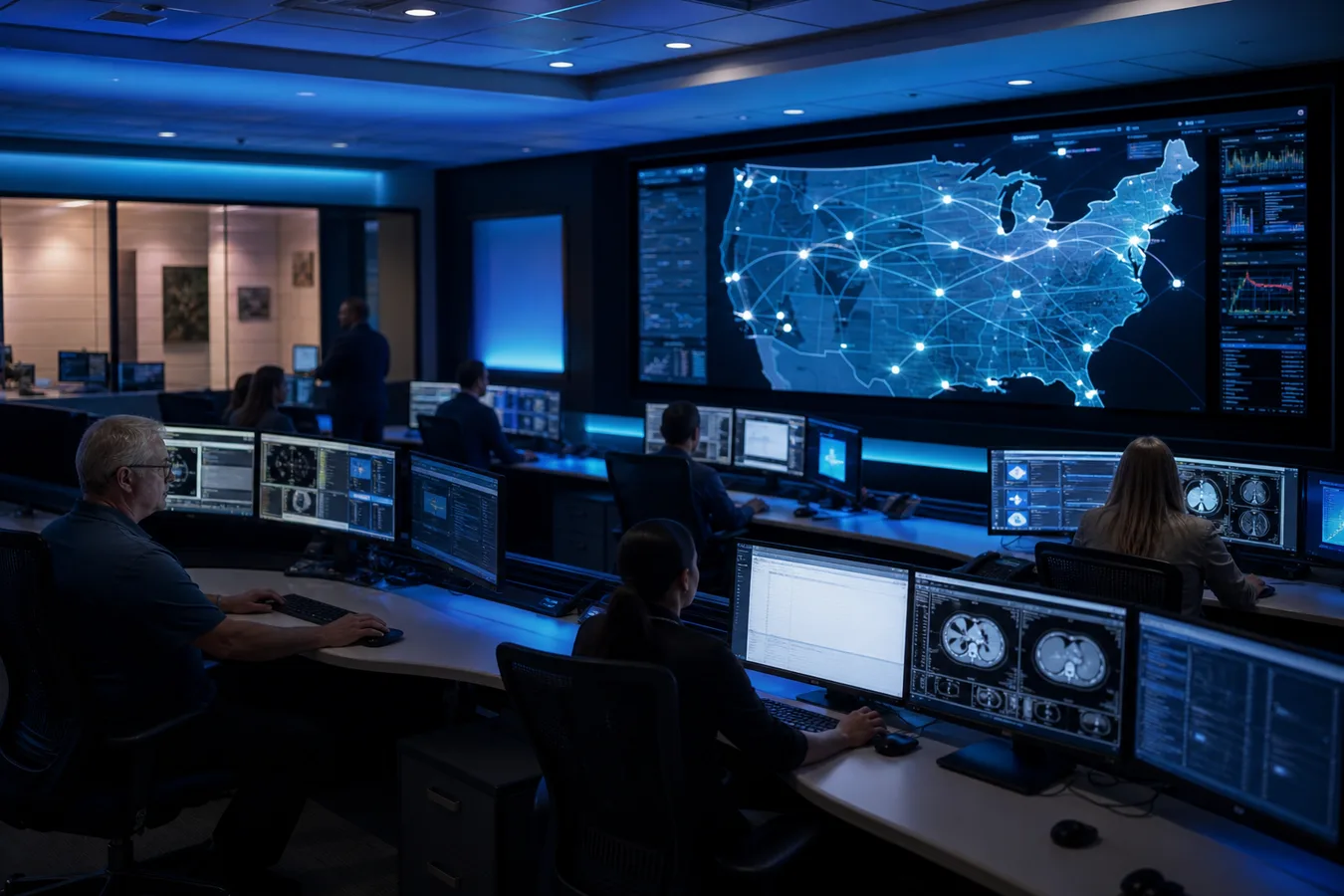
In-house radiology means radiologists who are employed or contracted directly by a facility and read on site; teleradiology means studies are transmitted electronically and interpreted by licensed radiologists in another location. Neither is universally better. The right model depends on your study volume by hour, subspecialty needs, budget, and turnaround-time targets.
The practical question is rarely one or the other. It is which work belongs in-house and which is better covered remotely.
Teleradiology vs in-house radiology: side-by-side
| Factor | In-house radiology | Teleradiology |
|---|---|---|
| Coverage hours | Limited by staff schedule | 24/7/365 available |
| Cost structure | Fixed salaries and benefits | Scales with volume or coverage |
| Subspecialty access | Limited to who is on staff | On demand (neuro, MSK, peds, etc.) |
| On-site presence | Yes (procedures, consults) | No physical presence |
| Turnaround at peak/off-hours | Can lag without extra staff | Designed for fast prelims |
| Speed to scale | Slow (hiring) | Fast (weeks) |
When does in-house radiology make more sense?
In-house radiology wins when a facility has high, steady daytime volume, needs radiologists physically present for image-guided procedures and in-person consults, and wants direct, day-to-day control over its team. For a busy hospital during business hours, an on-site team is both efficient and clinically valuable.
When does teleradiology make more sense?
- Nights, weekends, and holidays where in-house staffing is expensive to sustain
- Overflow volume during peak hours that would otherwise grow a backlog
- Subspecialty reads your on-staff radiologists do not cover
- Multi-site groups that need consistent coverage without hiring at every location
- Facilities that want cost to track volume instead of fixed headcount
What about the operational work in between?
Whichever reading model you choose, someone still has to relay critical results, answer calls, triage the worklist, and coordinate addendums. That non-interpretive load is what pulls radiologists off the worklist. A virtual PACS administrator handles it remotely so both in-house and teleradiology reads move faster. For the economics of outsourced reading, see the teleradiology cost and pricing guide.
About the author
RadAssistPro Clinical Operations
PACS Administration & Teleradiology Operations
The RadAssistPro clinical operations team supports U.S. radiology groups, imaging centers, and hospital networks with virtual PACS administration and preliminary teleradiology coverage that runs inside their existing PACS. Guidance below reflects real onboarding, relay, and turnaround-time workflows the team runs across supported facilities.